
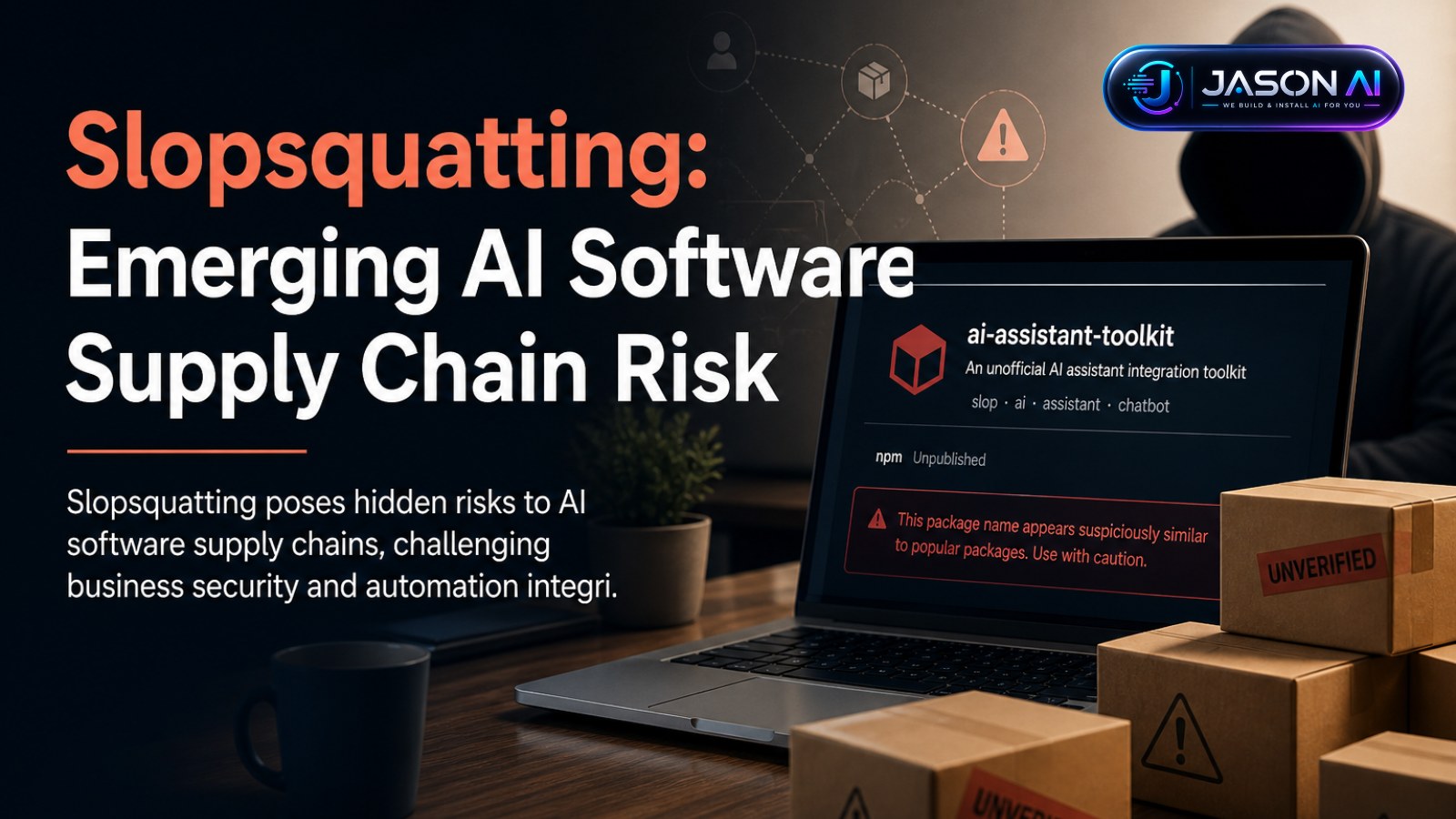
As artificial intelligence continues to integrate deeper into business workflows and software development, new security challenges are emerging. One such concern is slopsquatting, an evolving risk that could impact the AI software supply chain.
What Is Slopsquatting?
Slopsquatting is a term used to describe a form of supply chain attack where malicious actors register domain names or software package names that closely resemble legitimate ones. These slight variations can trick automated systems or developers into downloading compromised or counterfeit code, leading to potential security breaches.
In the context of AI, where software packages and models are often sourced from public repositories, slopsquatting can introduce vulnerabilities that are difficult to detect. Unlike traditional typosquatting, slopsquatting exploits less obvious naming similarities, increasing the likelihood of accidental adoption.
Implications for Businesses and Developers
The practical effect of slopsquatting on businesses and developers can be significant:
- Security risks: Incorporating malicious AI components can lead to data leaks, corrupted workflows, or compromised automation.
- Operational disruption: Faulty or harmful code may disrupt critical business processes that rely on AI automation.
- Reputational damage: Organisations unknowingly distributing or using compromised AI tools risk customer trust and compliance issues.
Given the complexity of AI software supply chains, detecting slopsquatting requires vigilance and robust verification procedures.
Mitigation Strategies and Practical AI Adoption
To address slopsquatting risks, businesses should consider the following measures:
- Implement strict package and domain validation protocols.
- Use trusted sources and verified repositories for AI software components.
- Educate development teams about supply chain risks and naming deception tactics.
- Employ automated tools that flag suspicious package names or domains.
While the threat landscape evolves, practical AI adoption depends on balancing innovation with security awareness. Organisations leveraging AI automation must prioritise supply chain integrity to safeguard workflows.
For businesses seeking expert guidance on secure AI integration and automation, offers tailored solutions to help navigate these emerging challenges.
Disclaimer: This article discusses potential risks based on emerging topics and does not confirm specific incidents or outcomes. Readers should apply due diligence when evaluating AI software supply chains.
For JASON AI services, AI News, and practical AI installation guidance, visit https://jasonjuul.com.