
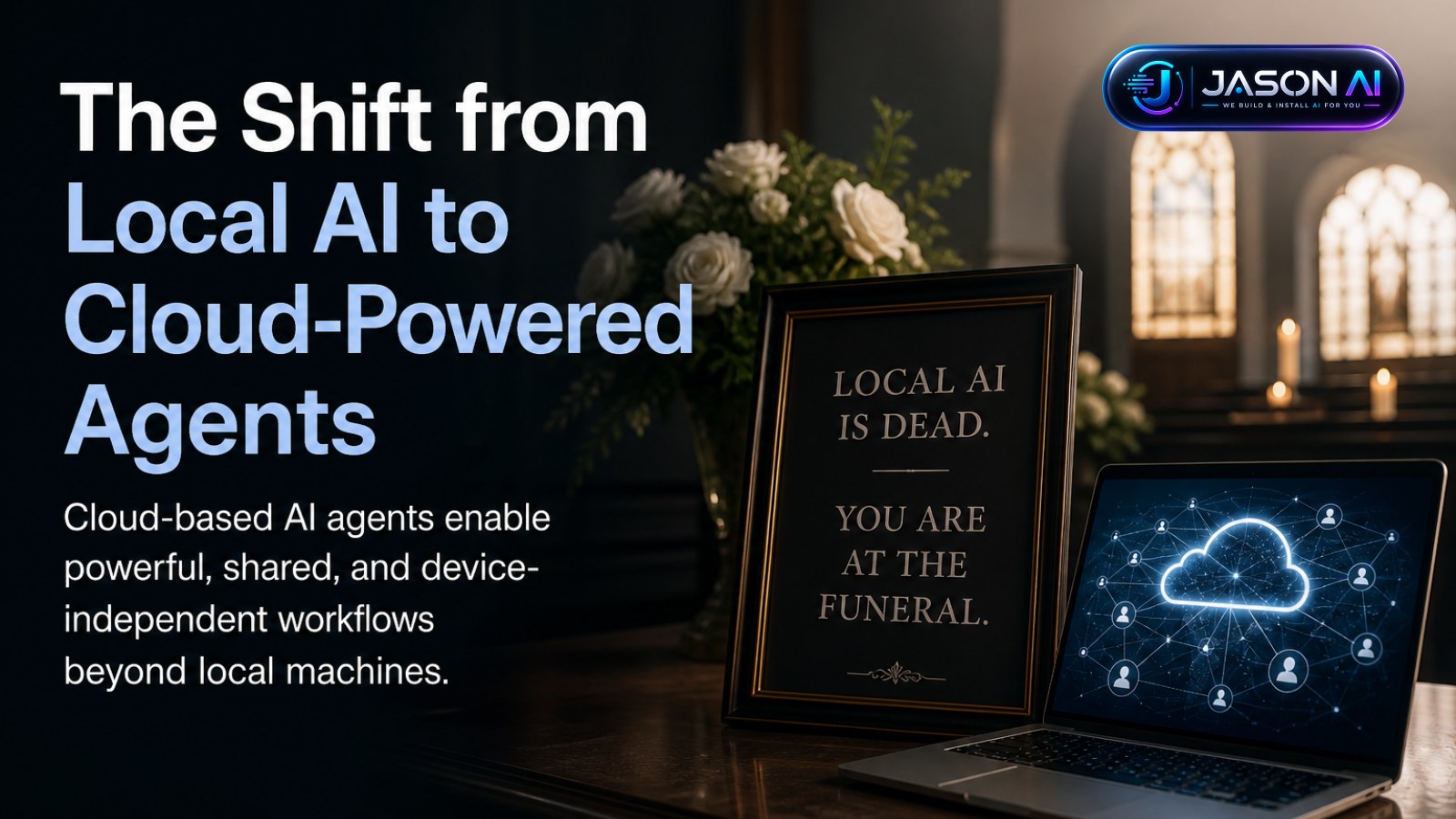
The era of local AI running primarily on personal devices is drawing to a close, as cloud-based AI agents take centre stage. This shift reflects a broader transformation in how work, especially development and AI-driven tasks, is performed across devices and teams.
Why Local AI is Losing Ground
Early attempts to move development environments to the cloud were initially met with scepticism. However, the core advantage is clear: cloud computers are far more powerful than typical laptops. They allow multiple isolated environments to run simultaneously without competing for limited local resources such as RAM.
Developers no longer need to rely on a single physical machine. Instead, their work can live in the cloud, accessible from any device — be it a laptop, phone, or a colleague’s computer. This means the intelligence and runtime environments are decoupled from the local hardware, improving flexibility, collaboration, and scalability.
Cloud Agents: The New Workhorse
Modern AI agents, such as those powering OpenAI Codex, Replit Agent, and Grok Bot, operate entirely in the cloud. They run in isolated virtual machines, each with its own kernel and full development environment. This architecture supports multiple parallel sessions for one user or shared sessions among teams.
- Workflows are device-agnostic, enabling seamless switching between phone, desktop, or other devices.
- Agents can authenticate independently, accessing platforms like Slack or GitHub without installing software locally.
- Collaboration is enhanced as teammates can join the same cloud environment without sharing physical hardware.
This approach contrasts with the idea of running AI models locally on edge devices or specialised hardware like NPUs or Mac Studios. While local AI may serve niche uses prioritising privacy or latency, it is unlikely to dominate where large-scale, shared intelligence and complex workflows are required.
Hybrid models, combining local and cloud resources, are often transitional rather than a long-term architecture. The trend is clear: the "brain" of AI agents remains in the cloud, with local devices acting as interfaces or "windows".
For businesses and individuals, this means adopting cloud-based AI agents offers greater power, flexibility, and collaboration potential. It also reduces the need for costly, high-end local hardware and simplifies software management.
To explore practical AI adoption and cloud agent solutions, visit https://jasonjuul.com.
Disclaimer: This article summarises current industry trends and community insights. It does not guarantee specific product capabilities or outcomes. Organisations should evaluate cloud AI solutions based on their unique requirements and compliance needs.