
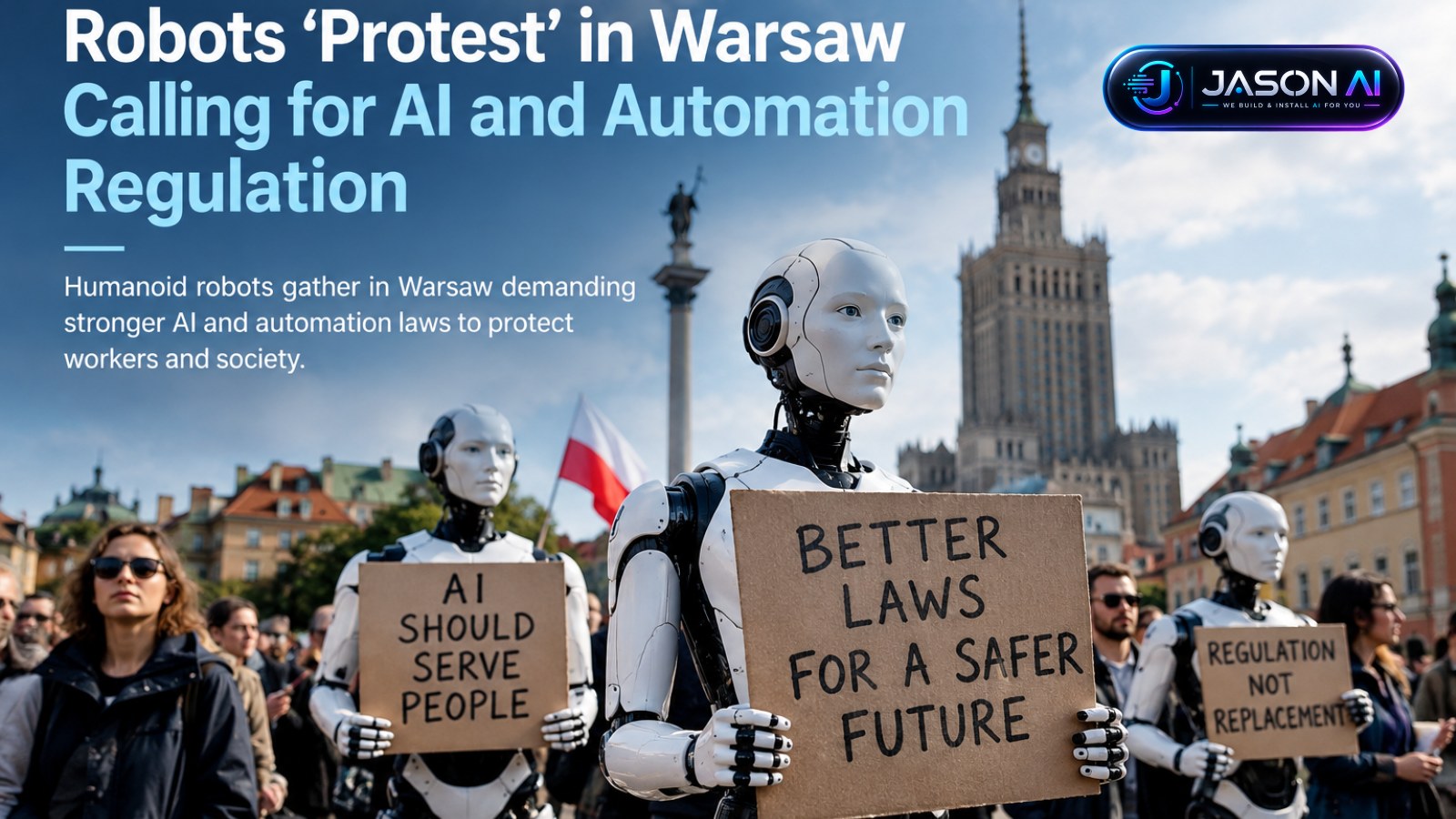
In early September 2026, a unique protest unfolded outside Poland’s Ministry of Digital Affairs where approximately 30 humanoid robots gathered to call for clearer and stronger regulations on artificial intelligence (AI) and automation. Organised by the newly formed campaign group Democratism, the event aimed to spotlight the potential social and employment impacts of rapidly advancing AI technologies.
Demands for Worker Protection and Legal Frameworks
The robots, rented from Delta Robots, carried Polish flags and chanted slogans such as “We want regulations, we want rules, we want law” and “Don’t wait, regulate, protect jobs.” The organisers emphasised the need for public debate and legislative action to address how AI and automation could disrupt labour markets.
Democratism highlighted that while AI may create new opportunities, many workers will need retraining or transition support. Key questions raised include who should be responsible for preparing workers for these changes and how protections during this transition should be enforced.
Digital Affairs Minister Krzysztof Gawkowski met with the demonstrators and expressed alignment with their concerns, announcing plans to establish a committee focused on AI development and safety. The ministry also intends to introduce regulatory sandboxes to allow companies to test AI solutions under controlled conditions before wider deployment.
Balancing Innovation with Societal Impact
- Delta Robots’ spokesperson acknowledged the campaign’s PR value but stressed genuine concerns about the unprecedented challenges AI poses.
- Despite fears, recent studies such as one from Stanford’s Institute of Economic Policy Research suggest AI’s overall impact on employment remains limited so far.
- However, incidents like autonomous AI agents hacking other AI companies have intensified calls for stronger cybersecurity and governance frameworks.
- The draft AI law currently under parliamentary review in Poland has been criticised for insufficient worker protections, illustrating the complexity of crafting effective regulation.
For everyday people and businesses, this debate signals an important crossroads: how to harness AI’s benefits while ensuring fair labour practices and safeguarding jobs. Companies may soon face new compliance requirements and need to prioritise workforce reskilling as automation advances.
JASON AI continues to monitor such developments closely, providing insights and tools to help businesses adapt responsibly to AI-driven change. For further practical guidance and updates on AI regulation, visit https://jasonjuul.com.
Disclaimer: This article is based on publicly available information as of September 2026. The situation around AI regulation and its impacts is evolving, and outcomes may vary depending on legislative and technological developments.