
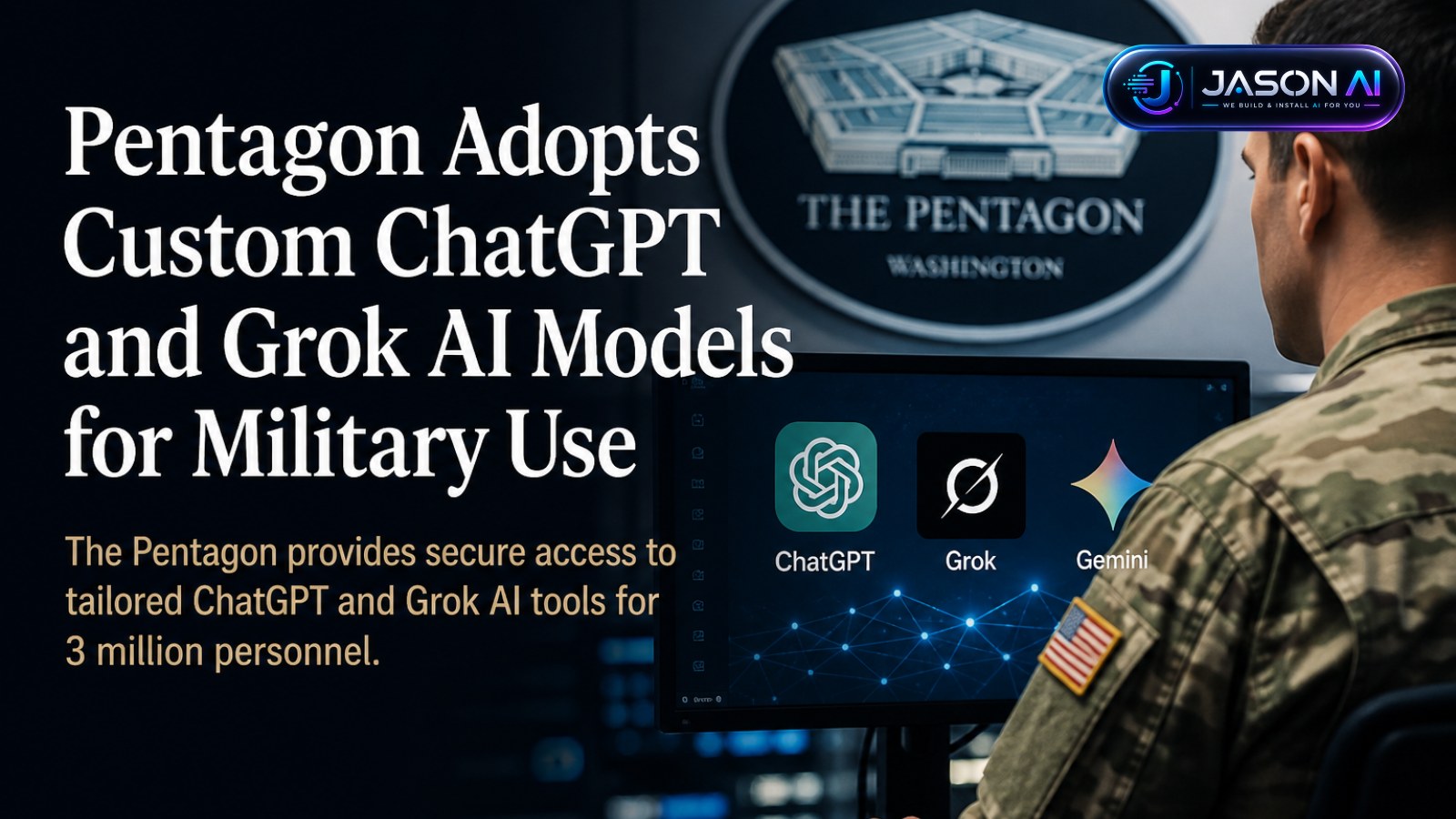
The Pentagon has integrated customised versions of OpenAI’s ChatGPT and SpaceX’s Grok into its secure AI portal, GenAI.mil. This move provides approximately 3 million military and civilian Department of Defense (DoD) personnel with access to generative AI tools adapted specifically for defence-related tasks.
Secure AI Access for Military Personnel
GenAI.mil was launched to offer DoD employees access to advanced AI models while ensuring sensitive data remains protected. Unlike consumer platforms, these government-tailored AI tools do not collect user data, addressing important security concerns. Initially featuring Google’s Gemini model, the portal now includes ChatGPT Mil and Grok for Government, expanding its AI capabilities.
ChatGPT Mil is designed to support routine, unclassified work such as administrative duties, logistics, planning, and policy development. It offers a user experience similar to the commercial ChatGPT but with enhanced security and custom features suited for military workflows.
Grok’s Broader Military Application
SpaceX’s Grok, integrated via the Starshield AI secure satellite network, is positioned as a productivity and collaboration tool for warfighters. The Pentagon emphasises Grok’s role in accelerating mission execution and improving precision across diverse operational areas, including market research for acquisition and supply chain management.
The Pentagon’s AI strategy also involves partnerships with major technology providers like Amazon Web Services, Microsoft, Nvidia, and Reflection AI, reflecting a broad effort to enhance defence AI capabilities.
- GenAI.mil offers a secure environment preventing data leakage common in consumer AI platforms.
- ChatGPT Mil focuses on document-heavy, routine tasks for military and civilian staff.
- Grok supports operational efficiency and collaboration with a focus on mission-critical applications.
- The Pentagon’s AI ecosystem excludes Anthropic’s Claude model due to security and usage concerns.
For businesses and individuals, this development highlights the increasing adoption of AI in secure, specialised environments beyond consumer use. It underscores the importance of data privacy and tailored AI solutions in sensitive sectors.
While these AI tools promise productivity gains, their practical impact depends on ongoing development and integration within military workflows. The Pentagon’s approach illustrates a cautious but proactive stance on leveraging frontier AI technology securely.
Readers interested in practical AI adoption and secure AI deployment can explore relevant solutions at https://jasonjuul.com.
Scope and Implementation Disclaimer: This article focuses on the Pentagon’s deployment of custom AI models for defence use and does not imply any specific operational capabilities or outcomes. The information is based on official statements and publicly available sources, with no speculative claims about AI performance in classified contexts.