
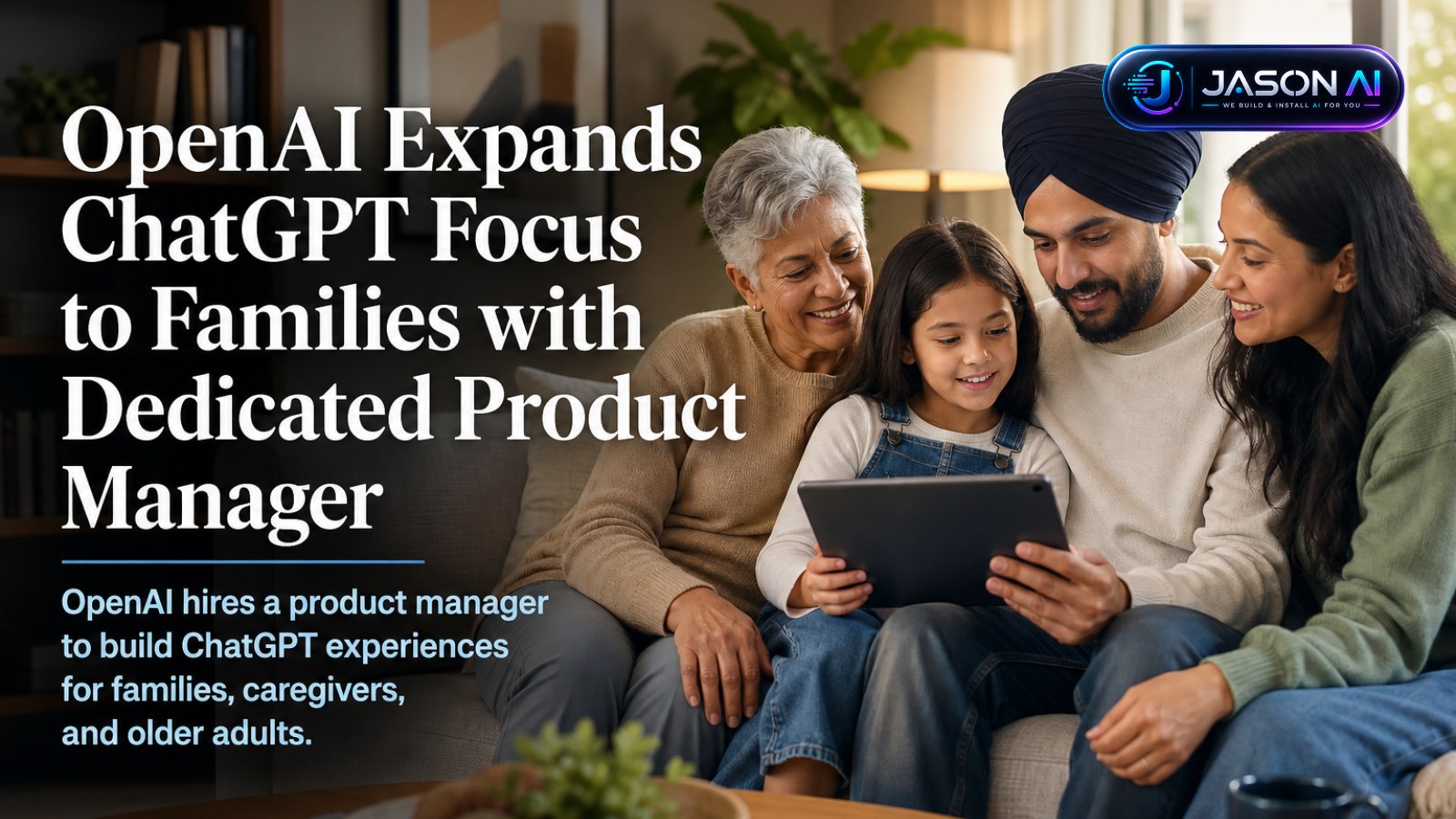
More than three years since ChatGPT popularised generative AI, OpenAI is shifting its focus beyond individual users to embrace families and households. The company is hiring a dedicated product manager in San Francisco to design AI experiences specifically for families, caregivers, and older adults. This role requires expertise in building trust-sensitive consumer products aimed at parents and families.
Changing User Demographics
ChatGPT’s user base is ageing. Data from Sensor Tower reveals that the share of users aged 35 and older globally increased to 31% in Q2 2026, up from 26% a year earlier. Meanwhile, younger users aged 18 to 24 declined from 34% to 29%. In the US, nearly 25% of smartphone users who are parents engaged with ChatGPT in the quarter, a notable rise from 16% previously.
Industry experts see this as a significant evolution. Ben Bajarin, CEO of Creative Strategies, notes that OpenAI’s move mirrors the trajectory of tech giants like Google and Apple, whose platforms eventually became household staples. However, AI’s role as an assistant raises unique trust and safety challenges that differ from traditional content or device mediation.
Safety and Trust for Younger Users
Stephen Balkam, CEO of the Family Online Safety Institute, highlights the importance of redesigning AI products with children and teenagers in mind. He emphasises the need for stronger content controls, age-appropriate experiences, parental oversight, and clear communication that users are interacting with AI, not humans.
Research from the Family Online Safety Institute reveals parents often underestimate their children’s use of generative AI. While 27% of US parents reported their child used AI in the past week, 38% of children said they had. This gap underscores the need for transparent and safe AI design.
OpenAI has responded with safety measures such as parental controls for teen accounts, specialised reasoning models for sensitive topics, and a “Trusted Contact” feature to alert caregivers in cases of potential self-harm. These steps aim to prevent harms and build trust as AI becomes more embedded in family life.
Broader Market Context
The demographic shift is not unique to ChatGPT. Competitors like Anthropic’s Claude and Google’s Gemini also see strong adoption among users aged 25 to 34. However, ChatGPT is growing faster among older users, with a notable increase in those aged 45 and above.
Among US parents using smartphones, Gemini leads with 32% reach, followed by ChatGPT at 24%. Bajarin predicts that consumer AI will increasingly offer family plans, child and teen profiles, caregiver tools, shared memories, AI tutoring, and enhanced safety features.
This strategic hiring signals OpenAI’s commitment to making AI a trusted, multi-generational household technology rather than just an individual productivity tool.
For businesses and families looking to integrate AI responsibly, exploring solutions like those at https://jasonjuul.com can provide practical guidance and tools for safe AI adoption.
Disclaimer: This article provides an overview of AI product development trends and safety considerations. It does not offer medical advice or clinical recommendations. Readers should consult appropriate professionals for health-related decisions.