
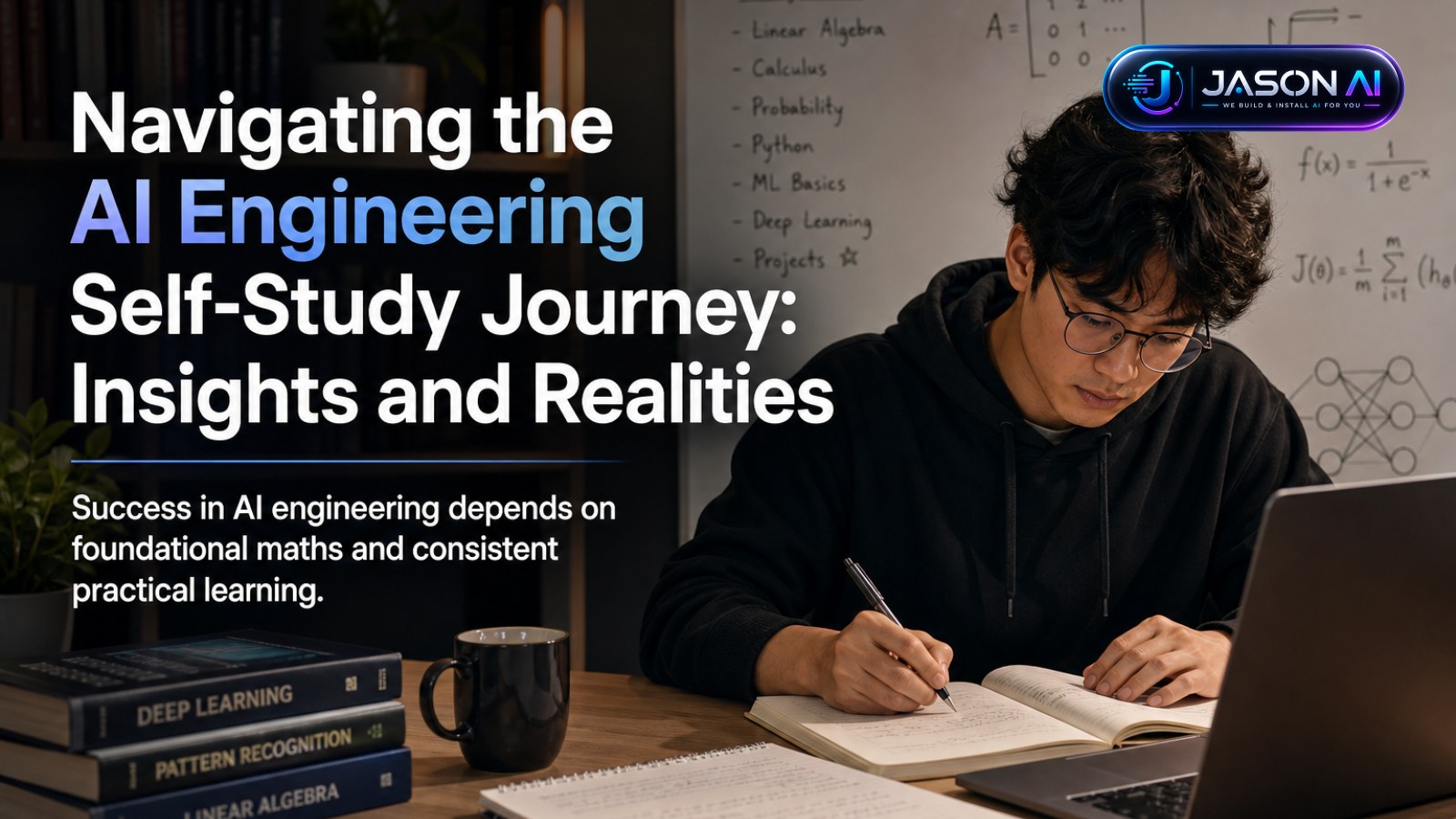
The growing interest in AI engineering has prompted many to consider self-study as a viable route into the field. However, the journey is not straightforward and varies significantly depending on an individual's background and dedication.
Foundational Knowledge is Key
Community discussions reveal that a strong grasp of mathematics—particularly linear algebra, calculus, and probability—is essential for anyone aiming to become proficient in AI engineering. For those with experience in related fields such as bioinformatics, familiarity with Python and statistics provides a helpful head start.
One contributor noted that six months of consistent study might be needed before feeling employable in AI roles, though useful skills and projects can be developed much earlier. This highlights the importance of a structured learning plan focusing on both theory and practical application.
Bridging Theory and Practice
Beyond mathematical foundations, reading foundational literature like "Understanding Deep Learning" and works by authors such as Prince can deepen understanding of how AI systems operate in real-world scenarios. This blend of theory and practice is vital for building meaningful projects and potentially innovative startups.
- Focus on core maths: linear algebra, statistics, probability
- Leverage programming skills, especially Python
- Engage with foundational AI and machine learning texts
- Build projects to apply and solidify knowledge
- Consider overlaps with adjacent fields like bioinformatics for unique insights
While community opinions provide valuable perspectives, it is important to approach self-study with realistic expectations and a clear roadmap. The practical effect for individuals is the ability to develop AI skills that can enhance career opportunities and contribute to business workflows.
For businesses, understanding the learning curve involved in AI engineering helps set realistic timelines for integrating AI automation and innovation into their operations.
For those interested in exploring practical AI adoption and automation further, resources such as offer guidance and tools designed to support both learners and professionals in navigating this evolving landscape.
Disclaimer: This article is based on community discussions and opinions and does not constitute professional or medical advice. Readers should verify information independently and consider their unique circumstances when pursuing AI education or implementation.
For JASON AI services, AI News, and practical AI installation guidance, visit https://jasonjuul.com.