
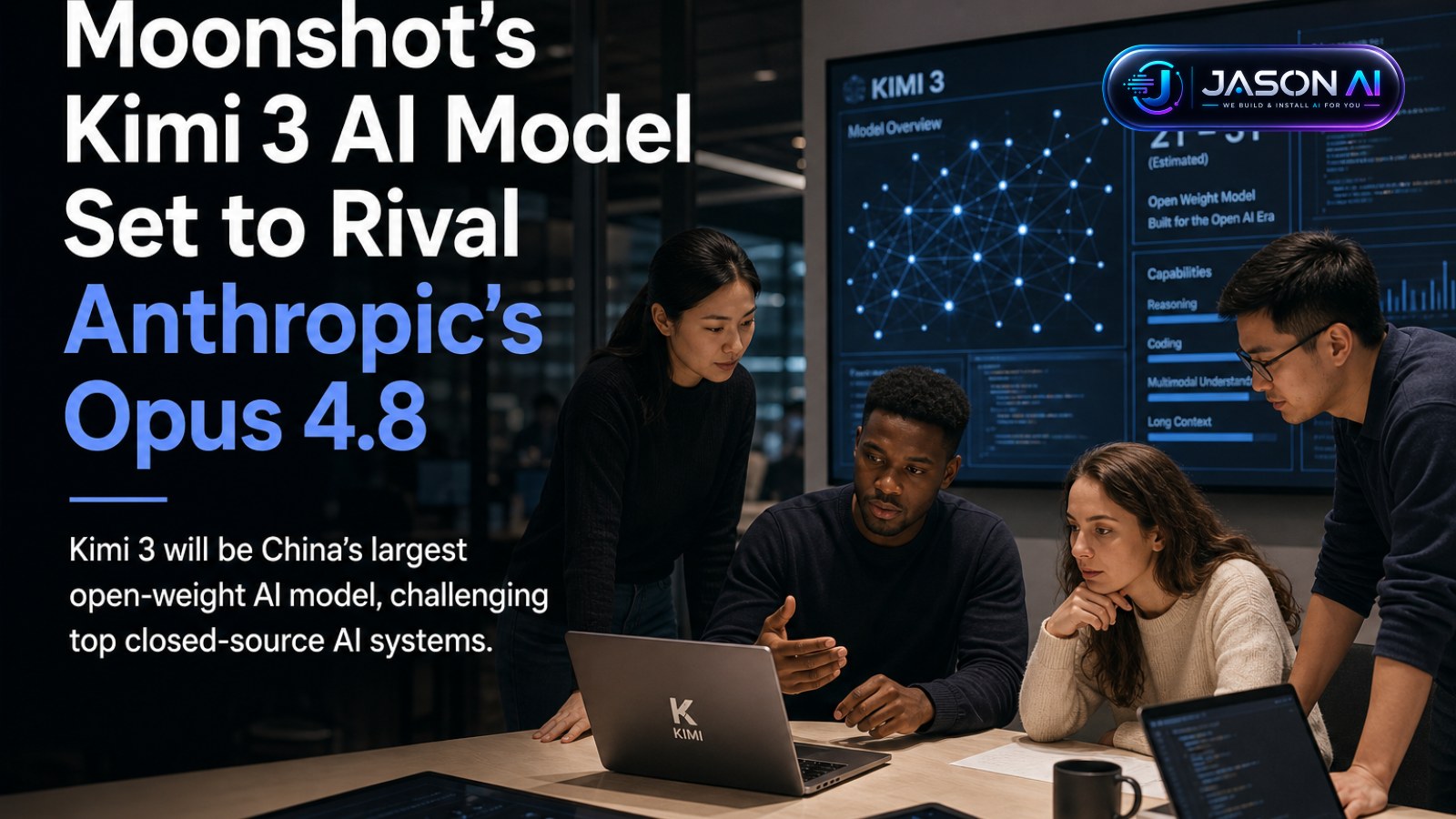
Chinese AI lab Moonshot AI is on the verge of releasing the latest version of its Kimi model series, Kimi 3, which is expected to perform competitively with, or even surpass, Anthropic’s Opus 4.8 model, according to sources cited by the Financial Times.
Moonshot’s previous Kimi K2 models have already made a mark in the open source AI community, ranking highly on benchmarks and demonstrating capabilities close to those of top-tier frontier models. The upcoming Kimi K3 aims to further narrow the performance gap with closed-source AI giants such as OpenAI and Anthropic.
Unprecedented Scale and Ambitions
Kimi K3 is reported to be the largest open-weight AI model from China, boasting a parameter count estimated between 2 trillion and 3 trillion. This scale positions it as a formidable contender in the global AI landscape. The model’s release is anticipated imminently, signalling a significant step forward for open-source AI development.
Alongside the product launch, Moonshot is reportedly raising additional capital, aiming for a valuation of $31.5 billion. This follows a $2 billion funding round in May that valued the company at $20 billion, underscoring investor confidence in its technology and market potential.
Industry Context and Open-Source Momentum
The announcement comes amid ongoing industry debates about the value and risks of relying on expensive closed-source AI models from labs like OpenAI and Anthropic. Concerns persist regarding data privacy and the potential for these companies to leverage client data submitted through AI services.
In response, many executives advocate for adopting open-source alternatives, which can be customised and trained for specific organisational needs. Companies like DeepSeek, Z.ai, and Moonshot are gaining traction by offering flexible, cost-effective models that empower users with greater control over their AI tools.
As AI adoption accelerates across sectors, models like Kimi 3 exemplify the growing viability of open-weight solutions that combine scale, performance, and transparency.
For businesses exploring AI integration, tools such as those featured on https://jasonjuul.com provide valuable resources for understanding and implementing AI workflows without compromising data security or scalability.
Disclaimer: This article provides an overview of AI model developments and industry trends based on publicly available information. It does not offer medical, financial, or legal advice. Readers should consult relevant experts before making decisions related to AI adoption.