
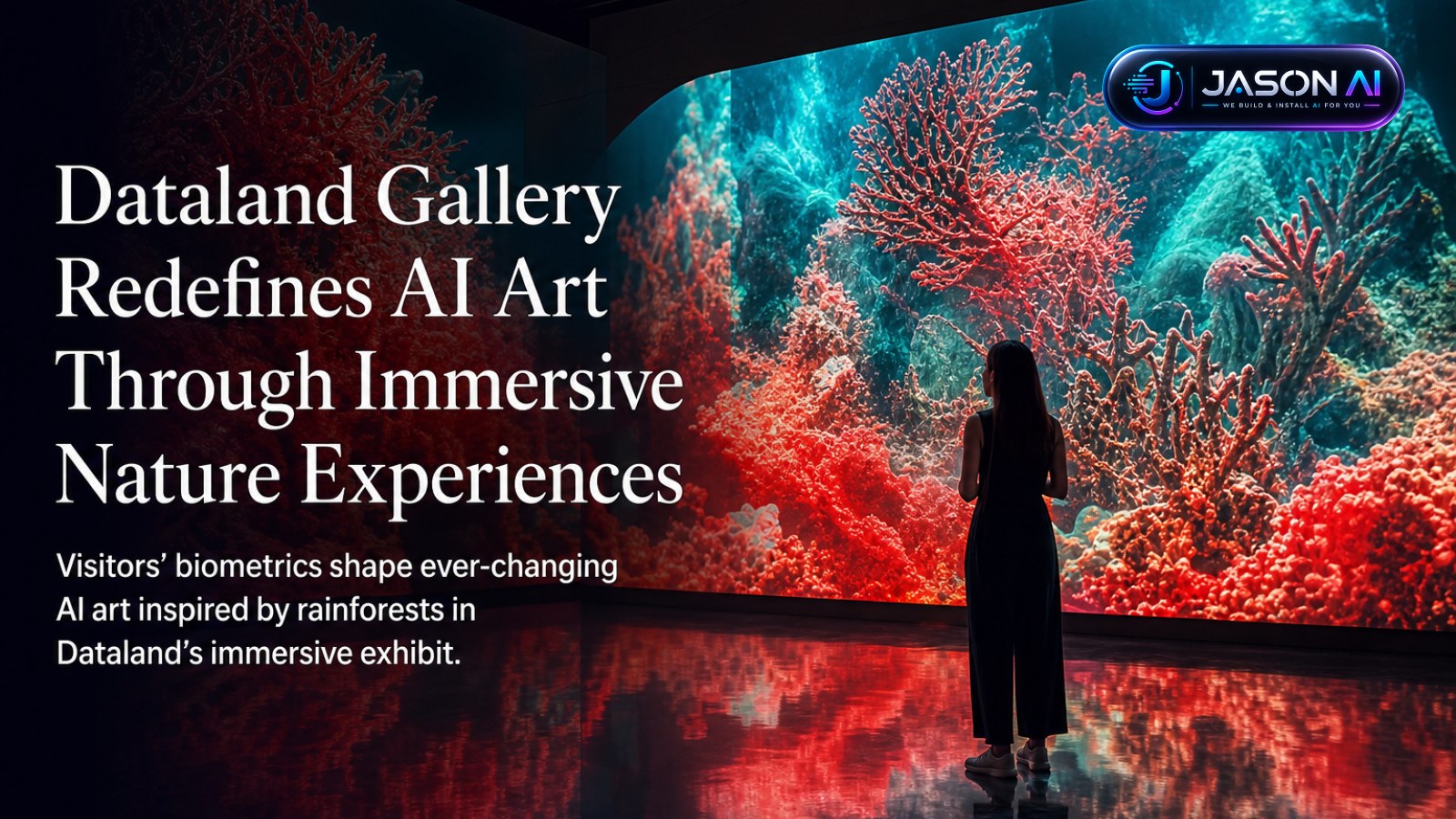
Los Angeles has welcomed Dataland, billed as the world’s first museum dedicated to AI arts. Cofounded by artist Refik Anadol and Efsun Erkılıç, the gallery offers an immersive experience that blends artificial intelligence with nature and human biometrics.
At the heart of the exhibit is Machine Dreams: Rainforest, an architectural installation featuring digital displays that shift in response to visitors’ movements and biometric data collected through wearable devices. The AI system powering this experience, the Large Nature Model, was trained over three years using 5 petabytes of raw data sourced directly from the Amazon and other rainforests. This data was ethically collected with researcher consent, contrasting with criticisms faced by major AI firms over unlicensed content use.
Visitors wear a smartwatch and a shoulder collar that emit scents and track biometrics such as heart rate and skin temperature. These inputs influence the exhibit’s visuals and soundscapes, creating a dynamic environment that feels alive and responsive. For example, simulated rain patterns change based on visitor movement, and the gallery can detect emotional responses like goosebumps or tears.
Dataland also offers a behind-the-scenes look at its AI through the Latent Gallery, where visitors can explore the training data categories, such as images of frogs, demonstrating the depth of information underlying the AI’s hallucinated natural scenes. The gallery’s goal is to demystify AI processes and show that AI art can be a profound, human-centred exploration rather than superficial generative content.
Refik Anadol emphasises that the project is about rediscovering humanity through AI, not replacing it. The gallery treats visitor data with respect, deleting biometric information upon exit while allowing visitors to retain a personal token of their experience. This approach stands in opposition to the invasive surveillance common in today’s digital world.
Dataland’s innovative use of AI and biometrics to create a living ecosystem of art offers a compelling vision for the future of AI in creative fields. It highlights ethical data use, sustainability powered by Google Cloud’s low-energy resources, and a commitment to immersive, emotional engagement.
For businesses and creatives exploring AI-driven experiences, Dataland exemplifies how technology can deepen human connection rather than diminish it. To learn more about practical AI adoption and automation in creative workflows, visit https://jasonjuul.com.
Scope and implementation disclaimer: This article explores AI art as an experiential and ethical application of AI technology. It does not provide medical or clinical advice. Readers should consider AI art installations as cultural and technological experiments rather than therapeutic interventions.