
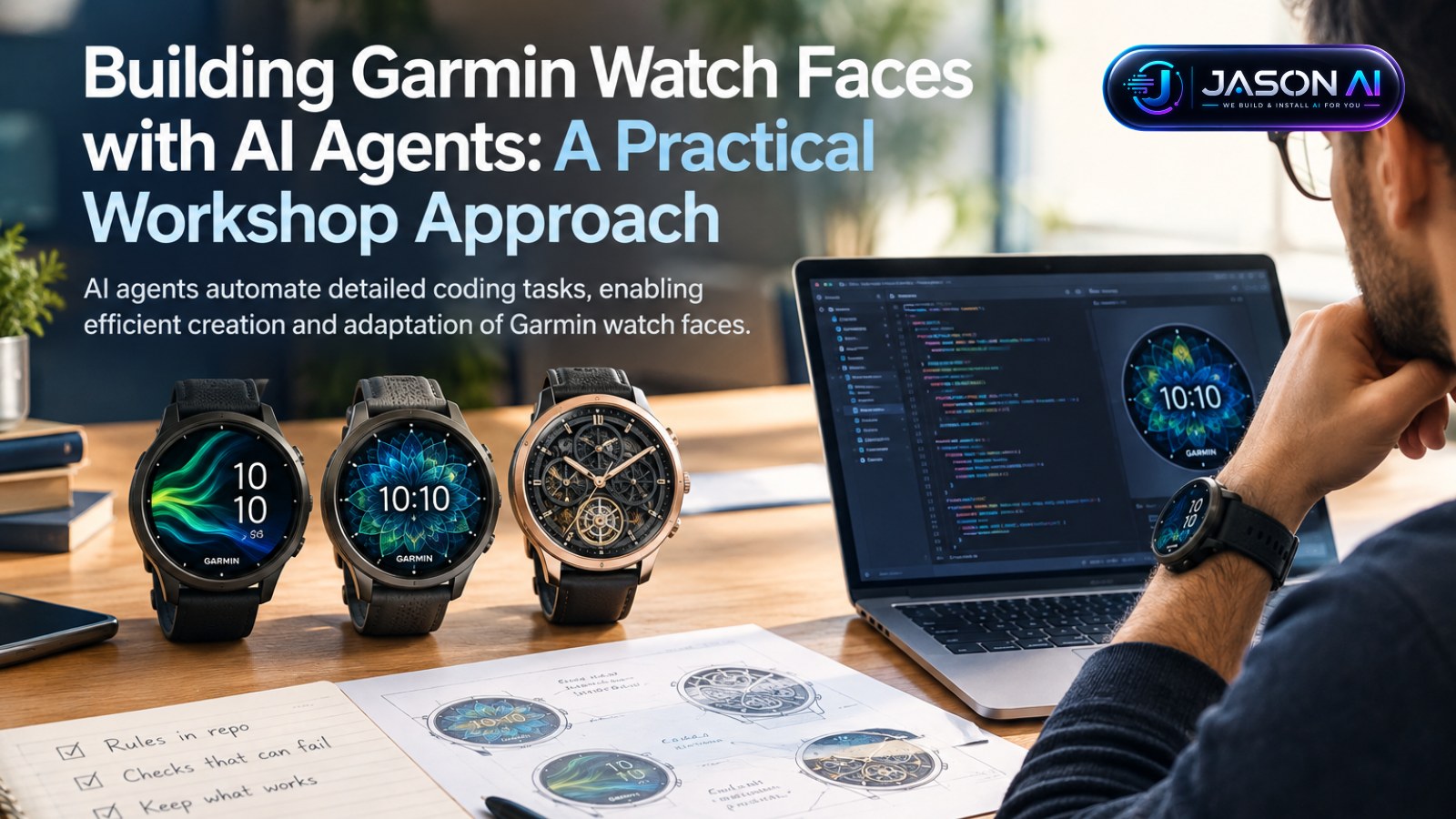
Garmin watch faces traditionally required painstaking manual coding. One developer recounts a transition from hand-coding to using AI coding agents to build and maintain a family of watch faces, illustrating practical AI adoption in software workflows.
AI Agents in Watch Face Development
The project began with a year of manual coding, producing an engine and initial watch face. Since July 2026, the developer employed AI agents—software models that automate coding tasks—to accelerate development. Over three months, roughly 1,200 commits were made, rebuilding older faces and creating new ones. The AI agents handled repetitive and detailed work such as arithmetic calculations, art layer cutting, measurements, and iterative adjustments.
Significantly, the developer emphasises the importance of a structured environment for the agents: a rules document, skill folders containing domain-specific logic, agent definitions, and scripts that run after each agent task. These components ensure agents work within clear boundaries and follow established protocols, mitigating errors and maintaining quality.
Lessons and Practical Implications
The developer learned several vital lessons about working with AI agents:
- Agents excel at mechanical and repetitive tasks but require human oversight for design decisions and quality checks.
- Verification must be done by humans reviewing outputs visually, as agents cannot interpret images themselves.
- Instructions to agents should focus on measurable outcomes rather than assumptions or beliefs, emphasising data-driven feedback.
- Maintaining concise, well-commented code and limiting document size helps agents perform consistently.
- Splitting development into clear phases—from concept prototyping to final listing—facilitates efficient agent collaboration.
This approach enabled rebuilding complex watch faces for modern AMOLED screens and adapting older designs, tasks that would have been prohibitively tedious manually. The AI agents effectively handled the dull, precise work, freeing the developer to focus on creative and evaluative aspects.
While some agent-generated designs sold less well, the faces that matched user demand performed strongly, underscoring the importance of aligning AI output with market needs.
Overall, this case highlights how AI automation can enhance business workflows in software development by managing routine tasks under human guidance, improving productivity without sacrificing quality.
For developers and businesses considering practical AI adoption, this example underscores the value of establishing clear rules, phased workflows, and human-in-the-loop verification to harness AI effectively.
Explore more about integrating AI into development workflows at https://jasonjuul.com.
Scope and implementation disclaimer: This article reflects one developer’s experience using AI agents for Garmin watch face creation. Results and methods may vary across projects and AI models. It does not endorse any specific AI product or guarantee outcomes.