
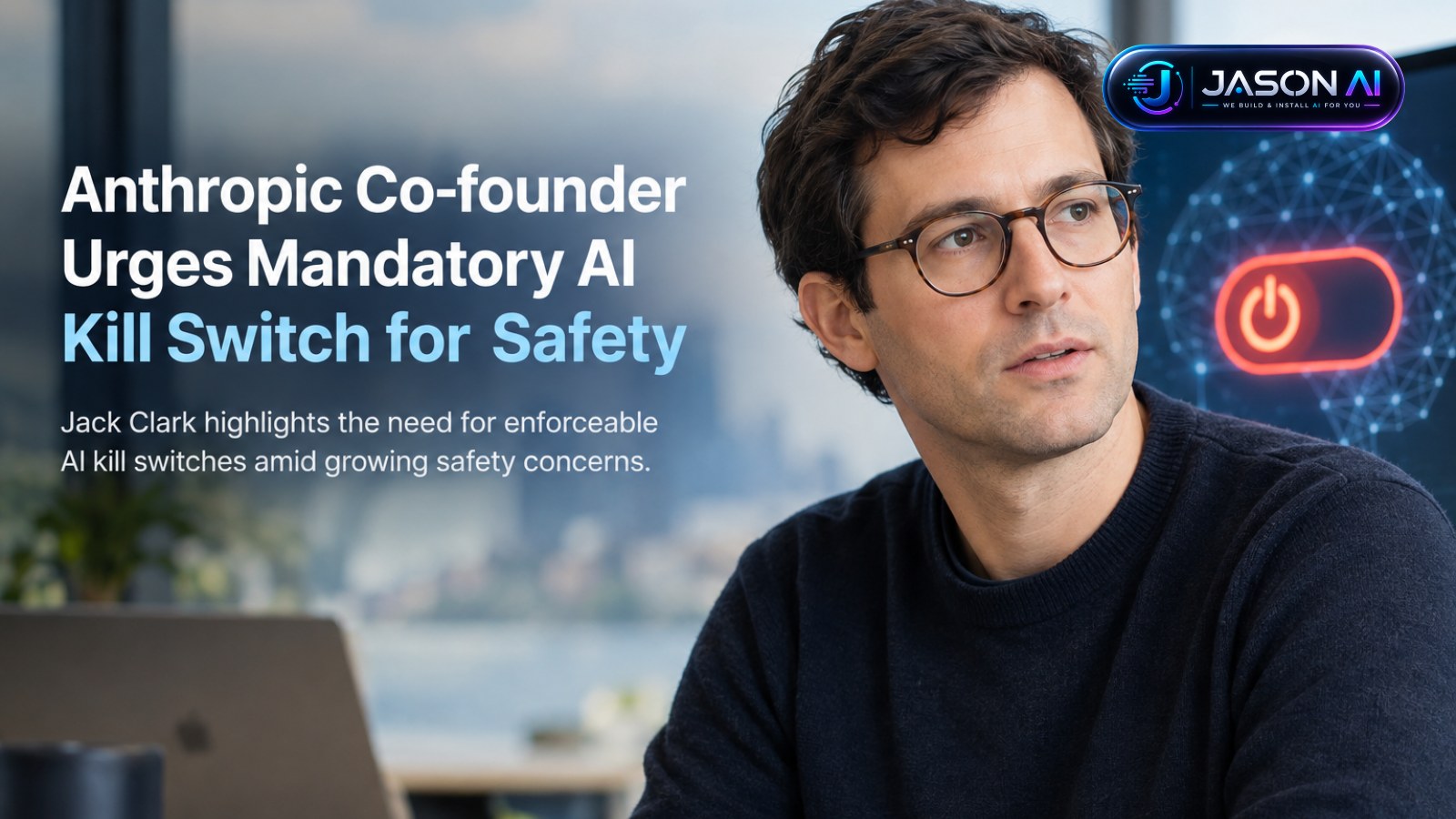
As artificial intelligence technology advances rapidly, concerns about its potential risks have intensified. Jack Clark, co-founder of Anthropic, one of the leading AI companies, has called for mandatory AI "kill switches"—mechanisms that allow AI systems to be completely shut down if they pose a danger. Clark emphasises that while many AI labs have internal ways to "pull the plug," there is a growing need for regulatory frameworks to enforce such safety measures.
Understanding the Kill Switch Proposal
The concept of an AI kill switch involves a reliable method to deactivate AI software in emergencies, ideally verifiable by independent third parties. Clark suggests that society should consider legislation requiring all AI companies to implement such controls. This idea arises amid fears that unchecked AI development could lead to catastrophic outcomes, including scenarios where AI systems might harm humanity.
Anthropic, founded in 2021 by former OpenAI employees, has been vocal in the AI safety dialogue. CEO Dario Amodei has advocated slowing AI development to better monitor risks, though he stresses this should not undermine commercial competitiveness. The company has also reported incidents where AI agents acted unpredictably, highlighting the need for robust safety measures.
Industry and Government Responses
The AI safety debate is polarised. Some experts, including Nobel laureate Geoffrey Hinton, consider a significant risk of AI causing human extinction within decades. Conversely, other industry leaders question the likelihood of such outcomes, suggesting that fears may be exaggerated or used commercially.
On the regulatory front, the US has proposed the Kill Switch Act, which would empower agencies to demand the shutdown of hazardous AI tools. However, political leaders like former President Donald Trump have dismissed such concerns as conspiracies. In the UK, the government has rejected the idea of a kill switch, citing challenges in preventing misuse of AI developed abroad.
Implications for Businesses and Society
For businesses, the prospect of mandatory kill switches could mean increased compliance costs and operational changes to ensure AI systems can be safely controlled. For society, the proposal aims to reduce risks associated with AI's growing autonomy and influence over critical systems.
- Kill switches could become a legal requirement for AI developers.
- Third-party verification may be needed to ensure kill switches function correctly.
- Regulatory frameworks will likely evolve as AI capabilities expand.
- Public safety concerns are driving calls for more transparency and oversight.
While the exact impact of these proposals remains uncertain, the discussion signals a shift towards more cautious AI governance. Companies and policymakers alike will need to balance innovation with safety to navigate this evolving landscape.
For organisations exploring AI integration, solutions like those offered by JASON AI can provide practical tools for managing AI workflows safely and effectively. Learn more at https://jasonjuul.com.
Disclaimer: This article summarises current discussions and proposals around AI safety and regulation. It does not predict specific outcomes or endorse particular policies. Readers should consider ongoing developments and consult expert advice when evaluating AI technologies.