
The promise of AI in products is clear: reduce wait times, remove human friction, and enable flexible, on-demand interaction. Yet, many companies have shifted from asking where AI genuinely helps to embedding it everywhere, often to the detriment of the user experience.
When AI Overshadows Product Identity
Take the example of Duolingo. Once a straightforward language-learning app, it now centres heavily on AI features. This shift risks alienating users who prefer the original experience or traditional learning methods. If users want a general AI chat, they can turn to dedicated platforms like ChatGPT. Forcing AI into every corner dilutes the product’s identity and may not solve the actual user problem.
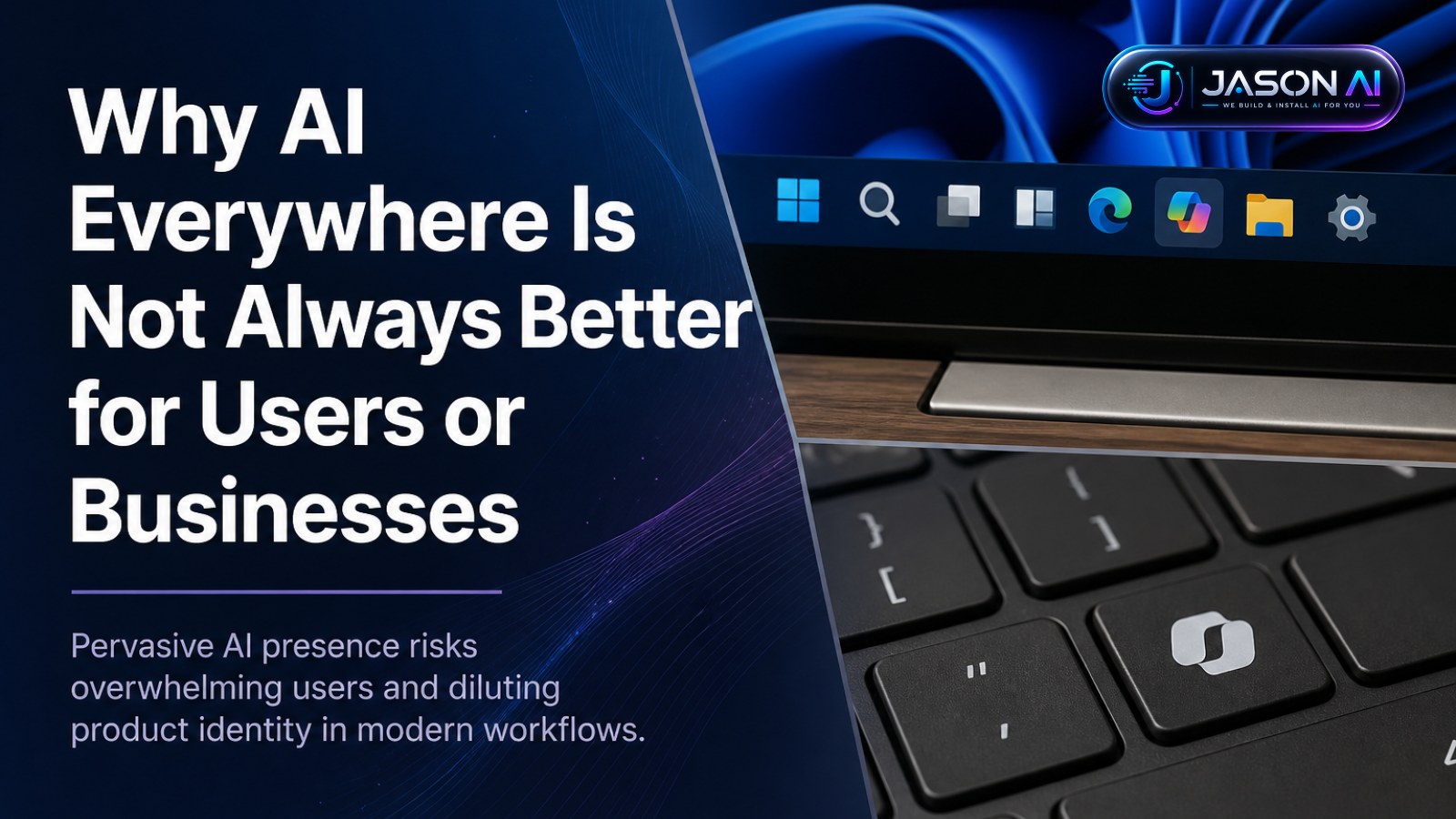
Microsoft’s rollout of Copilot across Windows illustrates another extreme. Copilot appears in core apps and even has a dedicated keyboard key on new laptops, signalling AI’s pervasive presence. The backlash was significant enough that Microsoft admitted the approach "went off track" and began scaling back AI integration in some apps. This example highlights how aggressive AI deployment can overwhelm users and blur the product’s purpose.
Smart AI Integration Means Enhancing, Not Replacing
Apple’s approach contrasts sharply. AI works quietly in the background—summarising emails or assisting with tasks users are already performing—without changing the system’s core identity. This subtle use of AI respects user choice and complements existing workflows.
Similarly, AI as a study companion, where learners keep their material visible and use AI to clarify or deepen understanding, solves a real problem without replacing the learning process itself.
- AI should solve genuine problems, not just add features.
- Overusing AI can increase costs, energy consumption, and system fragility.
- Heavy AI reliance creates dependencies on cloud providers like AWS, Microsoft Azure, and Google Cloud, risking outages.
- Users who distrust or dislike AI risk being forced into unwanted experiences.
For example, replacing a human call agent with an AI assistant that merely collects basic information without speeding up the process adds complexity without benefit. This kind of AI deployment feels like noise rather than help.
Companies that succeed with AI use it as a tool to strengthen existing strengths, not as a product replacement. In healthcare, AI can process patient history in the background to streamline appointments without replacing the doctor’s role.
It is essential to understand that AI integration requires careful consideration of user needs, system reliability, and cost-effectiveness. Overenthusiastic AI deployment risks alienating users, increasing expenses, and creating fragile systems.
For businesses and developers interested in practical AI adoption that respects product identity and user experience, JASON AI offers insights and solutions tailored to these challenges. Learn more at https://jasonjuul.com.
Disclaimer: This article discusses AI integration trends and user experience considerations based on current industry observations. It does not provide medical advice or guarantee specific outcomes.