
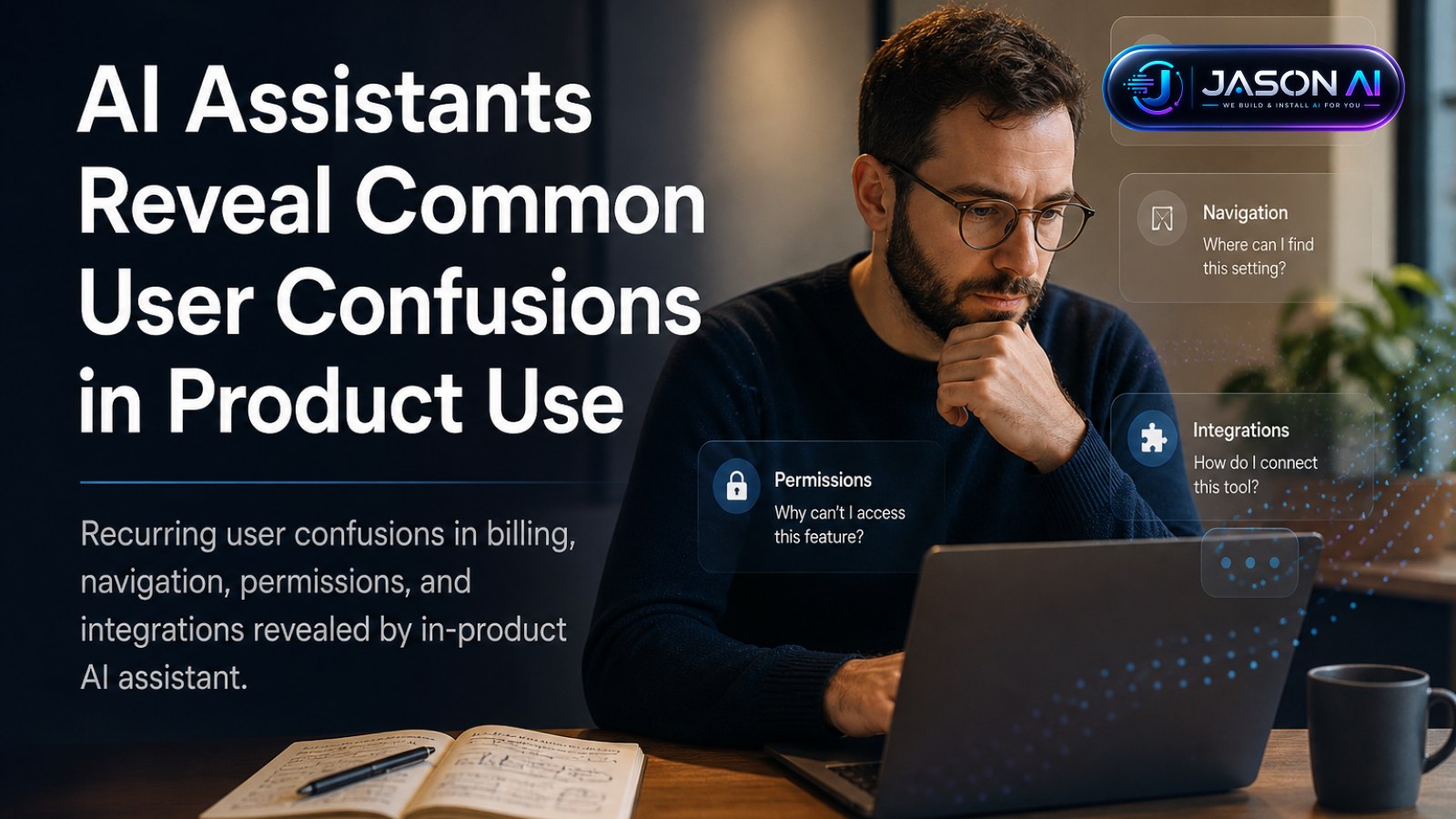
AI assistants embedded inside software are revealing a useful pattern: many users struggle with the same parts of a product, regardless of the industry it serves. Frigade, which develops in-product AI assistance, analysed the questions users asked over a year and grouped the recurring points of confusion.
Where users most often get stuck
The company says billing generates more questions than any other area. Payouts, fees, taxes, refunds and invoices carry high stakes, yet interfaces often provide little explanation. Navigation is another persistent problem as products gain features faster than users can update their mental map of where everything lives.
- Permissions and roles: users are unsure who can perform an action, access a feature or change a setting.
- Dashboard metrics: people see figures without being taught what each number measures.
- Setup and integrations: multi-step configuration is hard to follow, while later syncing failures can leave orders, records or feeds missing.
- Sending and saving: failed messages, stale data and saves that do not persist quickly damage trust.
- Control and offboarding: users want more flexibility in existing features and clearer ways to cancel, pause, downgrade or delete.
Why support tickets show only part of the picture
Traditional support queues capture problems after frustration has built, and only from people willing to open a ticket. An assistant available on the screen where a person is working changes that behaviour. Users can ask smaller questions immediately, including questions they would never consider serious enough for a formal support request.
That produces a more detailed view of product friction. Repeated questions about the same control, metric or workflow can show where onboarding, interface copy or product design needs attention. The assistant is therefore both a support tool and a source of product research, provided the conversations are handled with suitable privacy controls.
AI can help, but it does not excuse confusing design
Context-aware answers may bridge the gap between complex software and user understanding, but they should not become a substitute for clear navigation and reliable workflows. If an assistant repeatedly explains the same unclear screen, the underlying screen still needs work.
Frigade also promotes “Skills”, a no-code feature intended to let its assistant take approved actions inside a product rather than only answer questions. That is a company capability claim, and its practical value will depend on implementation, permissions, safeguards and ongoing testing.
A practical starting point for businesses
Teams can audit their own product against these recurring themes: money, orientation, access, metrics, setup, integrations, reliability, control and leaving. Reviewing assistant queries alongside support tickets and behavioural data can expose friction earlier and help prioritise improvements with evidence.
For JASON AI services, AI News, and practical AI installation guidance, visit https://jasonjuul.com.