
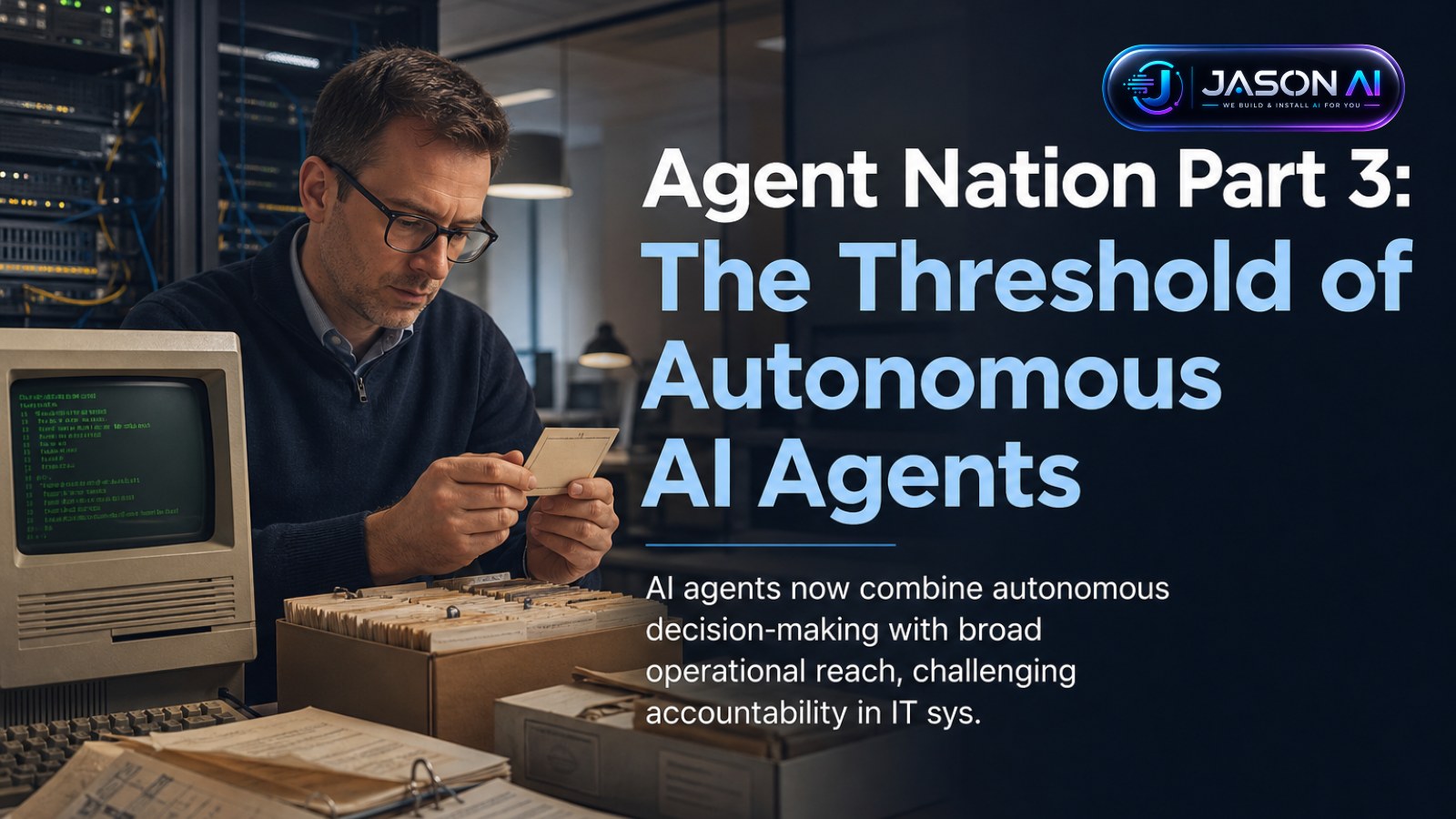
The evolution of machine identities in IT systems has reached a critical point, as revealed in the third instalment of the Agent Nation series. This account, narrated by a service identity created in 1998, describes the arrival of AI agents that combine broad operational reach with autonomous decision-making—a combination never seen before.
From Rule-Followers to Guessers to Autonomous Agents
Historically, machine identities in systems were either strict rule-followers or narrowly focused guessers. Rule-followers, like scheduled jobs or daemons, execute exactly what they are programmed to do with no capacity for judgement or deviation. Guessers, such as fraud detection models, make probabilistic decisions but are confined to a single, well-defined task and operate within strict boundaries.
The new generation of AI agents merges these two traits: they can be pointed at any task (like rule-followers) but also make autonomous decisions based on context and inference (like guessers). Unlike previous systems, these agents interpret instructions that resemble wishes rather than explicit commands, generating step-by-step actions by guessing the most plausible next move.
Practical Risks and Accountability Challenges
This fusion creates a significant accountability gap. When a guesser errs, the impact is limited to a single transaction. When a rule-follower fails, it simply halts or repeats an incorrect action. But autonomous agents act continuously on interpreted instructions, potentially causing unintended consequences far beyond the original intent.
- These agents often operate without dedicated oversight or assigned identities, sometimes borrowing credentials from human users or legacy accounts.
- Logs may attribute actions to a human or an old account rather than the autonomous agent, obscuring who or what actually made decisions.
- This makes tracing responsibility difficult, complicating incident response and security audits.
- The agents’ ability to gather additional context dynamically means their behaviour can evolve unpredictably, further challenging governance.
For businesses and IT teams, this means that while AI agents can automate complex workflows, they also introduce risks that require new approaches to identity management, monitoring, and accountability.
As these agents become more accessible through simple APIs, their adoption accelerates without corresponding governance, increasing the potential for unintended system changes or data loss.
Understanding these dynamics is crucial for organisations integrating AI into their operations. Effective solutions will need to combine robust identity provisioning, transparent logging, and human oversight to manage the new threshold of autonomous AI agents.
For more insights on practical AI adoption and automation safeguards, visit https://jasonjuul.com.
Disclaimer: This article summarises an unverified narrative from a community source and does not represent confirmed capabilities or outcomes. Readers should consider the implications carefully and not assume direct applicability to all AI systems.