
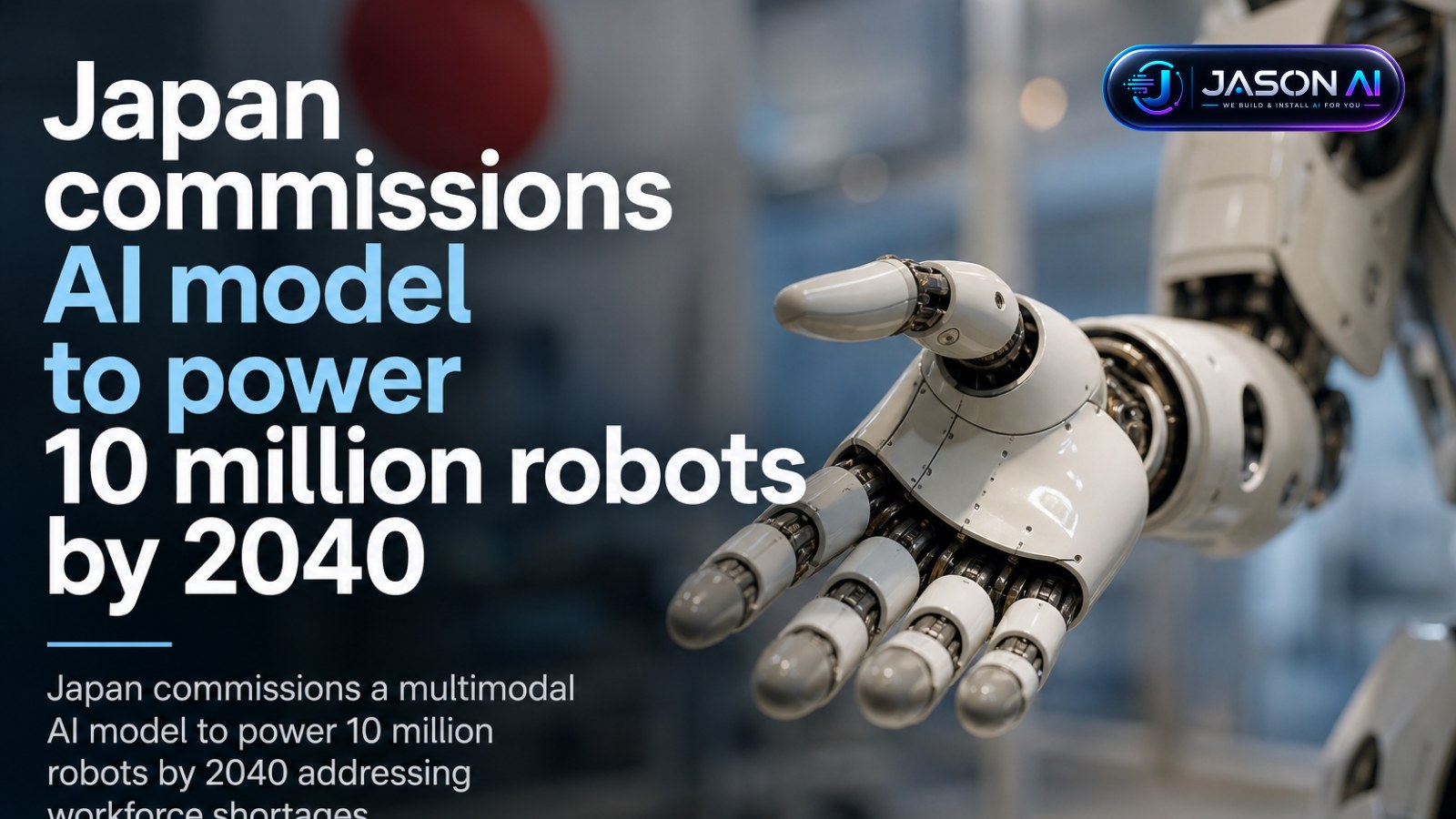
Japan has formally commissioned a national AI project to develop a foundational model that will power 10 million AI-enabled robots across multiple industries by 2040. This ambitious effort is backed by public funding of up to one trillion yen (approximately US$6.1 billion) over five years, signalling a major push to tackle the country’s severe labour shortages.
Consortium-led development
The project is led by Noetra and the National Institute of Advanced Industrial Science and Technology (AIST), commissioned by Japan’s Ministry of Economy, Trade and Industry (METI) and its innovation agency NEDO. The goal is to create a "physical AI" multimodal foundation model capable of interpreting language, images, video, and sensor data simultaneously. This will enable robots to understand and interact with their environments autonomously, moving beyond simple pre-programmed tasks.
The initial version of this AI model is expected to launch within the current fiscal year, with annual upgrades planned through to 2030. The development is supported by data contributions from manufacturers and other participating companies.
Funding and oversight
The first phase of funding is worth around US$2.3 billion, sourced from GX Economy Transition Bonds. However, only the first two years of funding are guaranteed, with subsequent allocations subject to annual reviews. This stage-gate process allows the government to reassess progress and withdraw support if milestones are not met, ensuring accountability for this large-scale national project.
Industry collaboration and strategic aims
Noetra is majority-owned by major Japanese corporations including SoftBank, NEC, Sony Group, and Honda, with Fujitsu and Rakuten considering joining. This consortium approach leverages existing hardware expertise—from Honda’s robotics to Sony’s imaging sensors—to build an integrated AI system.
Industry Minister Ryosei Akazawa emphasises the project’s role in addressing Japan’s ageing population and strict migration policies, which have created acute labour shortages in sectors such as restaurants, food manufacturing, and medical care. The initiative aims to accelerate the social implementation of AI-powered robots across these industries.
Building on existing robotics expertise
Japan’s robotics capabilities are already well established in elder care, disaster response, manufacturing, and nuclear cleanup. This project seeks to transform that expertise into scalable solutions that can be exported internationally, positioning Japan at the forefront of physical AI innovation.
The timing also reflects regional competition, with South Korea announcing a similar robotics initiative shortly after Japan’s confirmation. Both countries view physical AI as the next major frontier beyond software chatbots and cloud services.
Looking ahead
The key test for this initiative will be the initial stage-gate review. Success in delivering a usable AI model this fiscal year could attract further investment and broaden the consortium. Conversely, failure to meet milestones may lead to a quiet withdrawal of funding.
For businesses and researchers interested in AI adoption and robotics integration, this project exemplifies a strategic approach to national AI development, combining government funding, industry collaboration, and rigorous oversight.
Explore more on practical AI adoption and automation at https://jasonjuul.com.
Scope and implementation disclaimer: This article provides an overview of Japan’s national AI robotics initiative based on publicly available information. It does not offer medical or operational advice. Implementation outcomes depend on future technological, regulatory, and market developments.