
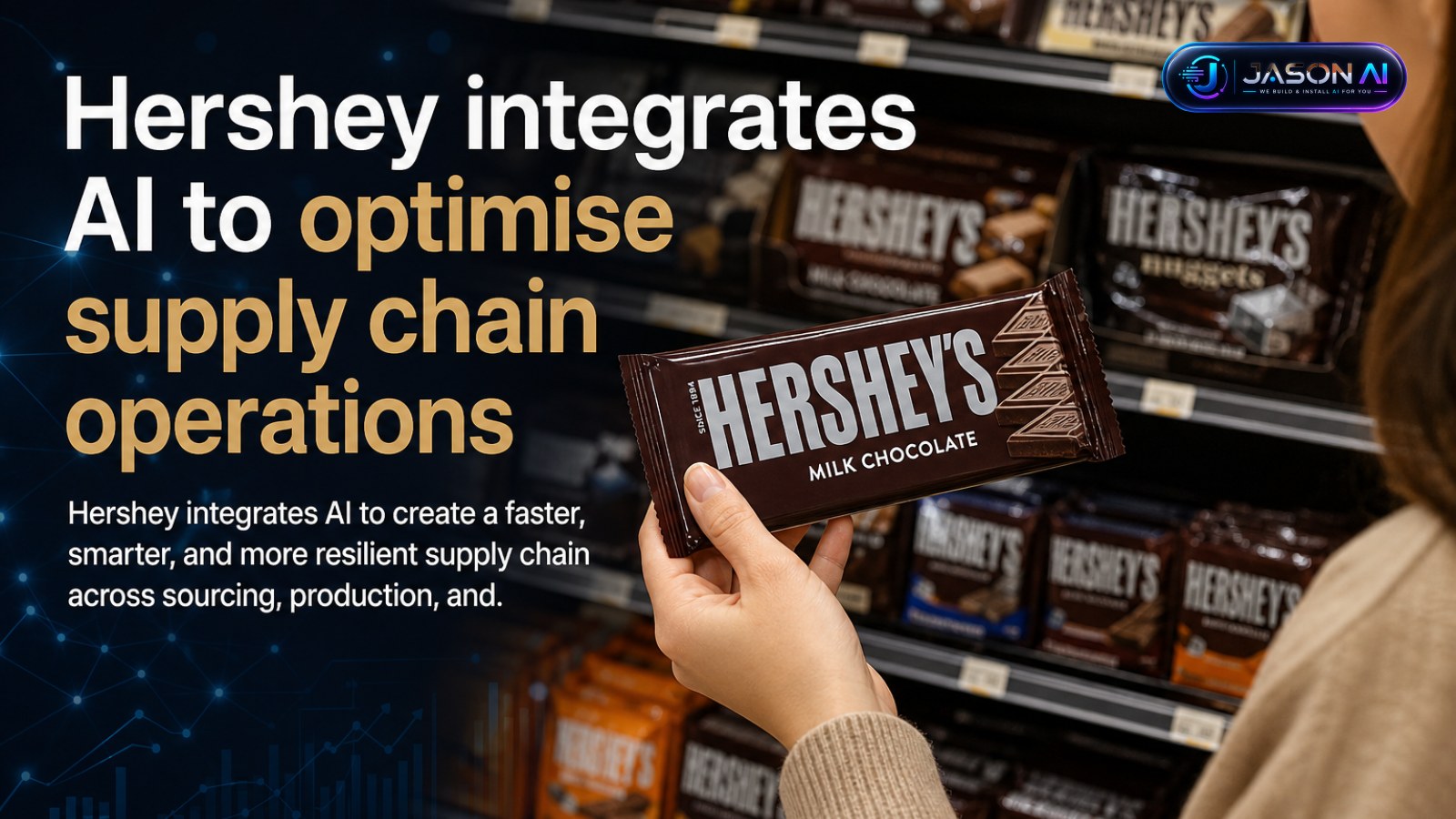
The Hershey Company is advancing its use of artificial intelligence (AI) to enhance efficiency and responsiveness across its supply chain. The confectionery giant announced plans to embed AI throughout sourcing, manufacturing, and fulfilment processes as part of a broader digital transformation strategy.
AI-driven supply chain improvements
Hershey aims to leverage AI-enabled decision-making to optimise ingredient sourcing and product distribution. By analysing supplier data and market trends, the company intends to improve purchasing strategies and mitigate risks associated with fluctuating input costs such as cocoa and sugar. Automated fulfilment systems will support custom product assortments and accelerate speed to market.
Digital planning tools will connect various business functions, helping to reduce waste, improve inventory management, and raise service levels. This integrated approach is designed to create a faster, smarter, and more resilient supply chain powered by automation and AI insights.
Manufacturing and workforce connectivity
Beyond sourcing and fulfilment, Hershey plans to increase plant automation to boost manufacturing efficiency. AI will become a core part of operational planning and execution, enabling quicker responses to changing conditions and demand patterns. The strategy also emphasises improving connectivity among workers, highlighting that AI adoption is not solely about automation but also about enhancing coordination within the business.
Such comprehensive AI integration reflects a shift from narrow pilot projects to enterprise-wide deployments, positioning AI as an essential component of physical goods supply and delivery systems.
Strategic outlook and industry implications
CEO Kirk Tanner summarised the company’s direction as a clear strategy ready to drive growth and performance. Hershey’s approach exemplifies how AI is increasingly embedded in industries reliant on physical products, quietly transforming daily operations behind the scenes.
Companies facing volatile input costs and demand fluctuations can benefit from AI’s ability to connect data with operational decisions, improving timing and reducing errors. Hershey’s case provides valuable insights for businesses aiming to integrate AI across complex supply chains.
Readers interested in practical AI adoption and workflow optimisation can explore relevant tools and solutions at https://jasonjuul.com.
Disclaimer: This article provides an overview of AI applications in supply chain management based on publicly available information. It does not offer medical or clinical advice or claims. Implementation results may vary depending on specific business contexts and technology choices.