
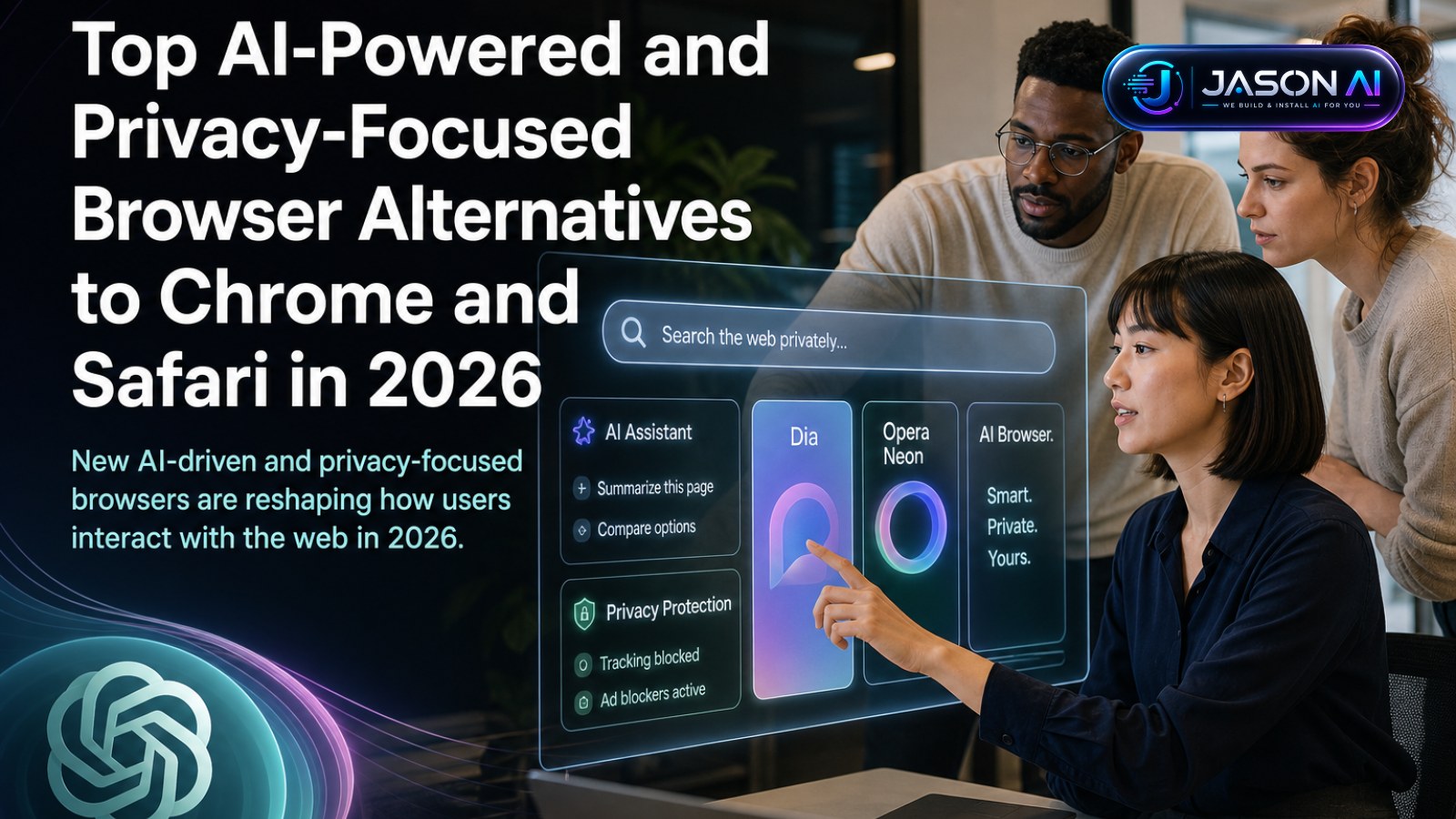
The browser market in 2026 is undergoing a significant transformation. No longer just gateways to the web, modern browsers are evolving into AI-powered assistants that act on users' behalf, changing how we interact online. While Google Chrome and Apple’s Safari still dominate, a wave of innovative alternatives is challenging their reign by focusing on AI integration, privacy, and user well-being. AI-Driven Browsers Enhancing User Productivity Perplexity’s Comet: An AI-powered browser available via a $200/month plan, Comet acts as a chatbot-based search engine that can summarise emails, browse pages, and perform tasks like sending calendar invites. The Browser Company’s Dia: Currently in invite-only beta for Arc members, Dia integrates AI chat to assist with web navigation, summarising content, and answering product queries by analysing users’ browsing and login data. Opera Neon: Available on macOS and Windows for $19.90/month, Neon offers contextual awareness, enabling offline research, shopping assistance, and code snippet generation. OpenAI Atlas: Launched on macOS with upcoming support for other platforms, Atlas embeds ChatGPT directly into the browser, allowing users to query search results and delegate tasks via an agent mode. Aside: Backed by Y Combinator, this upcoming browser-native automation platform promises autonomous task completion across apps like Gmail, Slack, and banking platforms by leveraging browser context. Jatter: Free with an optional $10/month subscription, Jatter offers AI-powered insights, personalised recommendations, and an integrated notes app to enhance browsing on multiple devices. Privacy and Mindfulness-Focused Browsers Brave: Known for privacy-first browsing with ad and tracker blocking, Brave also rewards users with cryptocurrency for opting into ads, and features a VPN, AI assistant, and video calling. DuckDuckGo: Enhancing its browser with generative AI chat and scam blocking, DuckDuckGo continues to prioritise user privacy by blocking trackers and avoiding data collection. Ladybird: Led by GitHub co-founder Chris Wanstrath, Ladybird is building a new open source browser from scratch, focusing on privacy features like ad blocking and cookie control, with an alpha release planned for 2026. Opera Air: One of the first mindfulness browsers, Opera Air incorporates mental well-being tools such as break reminders, breathing exercises, and binaural beats to support focus and relaxation. Zen Browser: An open source browser designed for a calmer internet experience, offering tab organisation, split view, and community plug-ins to enhance productivity. Customisation and Productivity Enhancements Vivaldi: A Chromium-based browser with a highly customisable interface, Vivaldi offers features like colour-changing tabs, ad blocking, password management, and productivity tools including a calendar and notes. SigmaOS: Mac-only with a workspace-style interface, SigmaOS organises tabs vertically for task management and includes AI features like summarisation and content rewriting. It offers free use with paid plans for unlimited workspaces. These emerging browsers reflect a shift in the industry towards integrating AI capabilities and prioritising user privacy and well-being. Users can select browsers tailored to their preferences, whether for AI-powered task automation, enhanced privacy, or mindful browsing. For businesses and individuals exploring AI automation and productivity tools, platforms like JASON AI offer practical solutions to streamline workflows. Learn more at https://jasonjuul.com.
For JASON AI services, AI News, and practical AI installation guidance, visit https://jasonjuul.com.